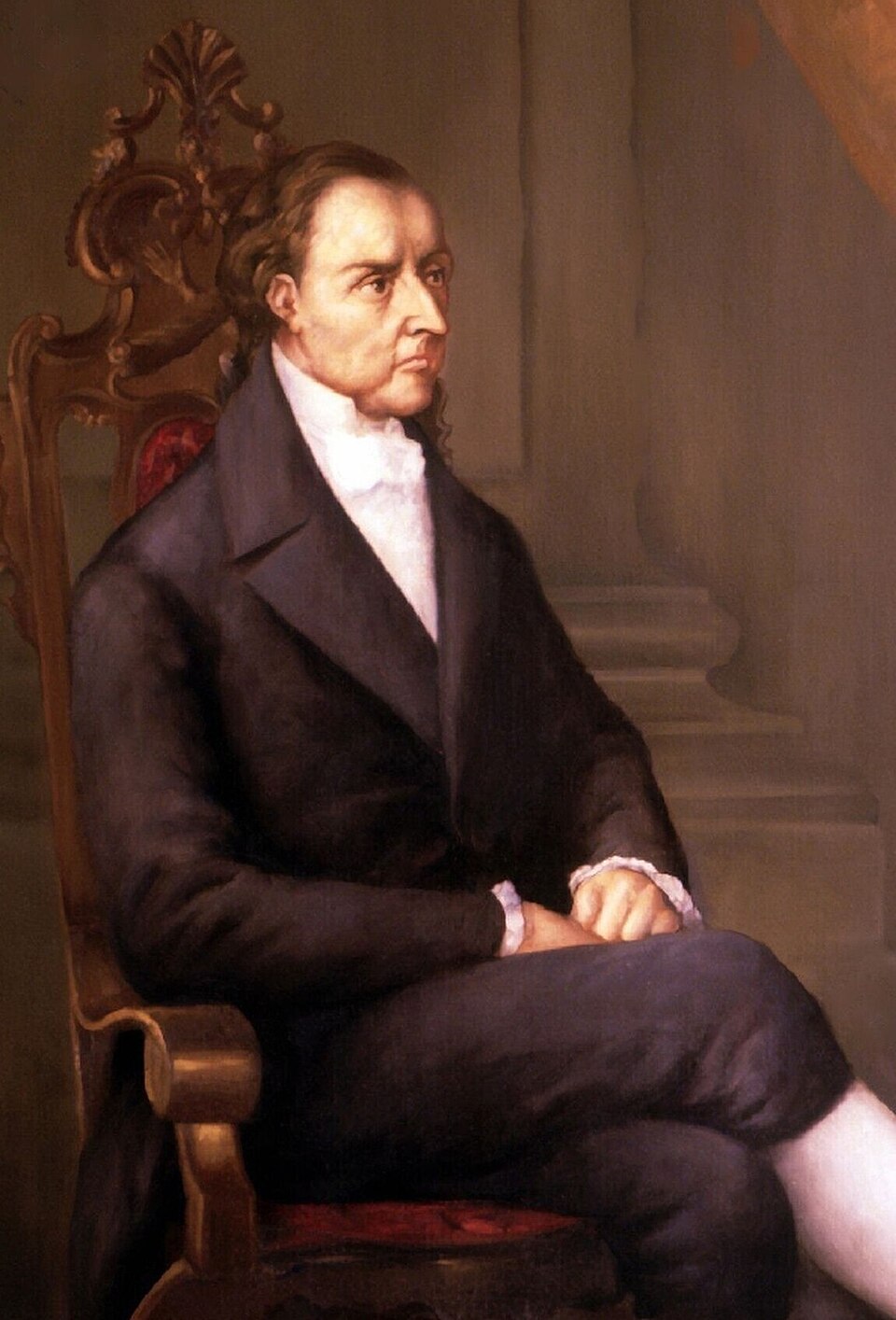
José Gaspar de Francia
Dr. José Gaspar Rodríguez de Francia y Velasco
First dictator of independent Paraguay, known as 'El Supremo', who fiercely protected the nation's sovereignty through isolationist policies.
Biography
José Gaspar Rodríguez de Francia y Velasco was born on 6 January 1766 in Asunción, Paraguay. Trained as a lawyer, Francia received an excellent education and became one of the most intellectually formidable figures in early independent Paraguay. When Paraguay declared independence from Spain in 1811, Francia emerged as a key leader of the revolutionary movement. Initially serving in a governing junta, he quickly consolidated power and in 1814 was named Supreme Dictator of the Republic, a position he would hold with absolute authority until his death on 20 September 1840. Known as "El Supremo," Francia ruled Paraguay for 26 years with an iron fist, implementing policies that isolated the nation from the outside world whilst simultaneously protecting its independence and sovereignty in ways that continue to generate fierce historical debate. Francia's isolationist policies were driven by a fierce determination to protect Paraguay's independence from the designs of both Argentina and Brazil, which sought to dominate or absorb their smaller neighbour. He sealed Paraguay's borders, severely restricting foreign trade and travel, and prohibited Paraguayans from leaving the country without permission. This isolation kept Paraguay free from foreign debt and interference at a time when other Latin American nations were falling into economic dependence on European powers. Francia's government was ruthlessly efficient: he eliminated the traditional aristocracy, confiscated church properties, and suppressed any potential opposition with harsh measures including imprisonment and execution. Personal freedoms were severely curtailed, and Francia maintained an extensive network of informants to detect any hint of dissent. Despite his authoritarian methods, Francia's rule brought certain benefits to Paraguay's common people. He promoted a form of state socialism, redistributing land from the church and aristocracy to create state farms that employed the poor. He maintained peace and order, and Paraguay experienced no internal revolts during his long dictatorship. The country remained solvent, avoiding the foreign debts that plagued other newly independent Latin American nations. Education and basic services were maintained, and Paraguay's economy, whilst isolated, remained stable. Francia's policies of self-sufficiency forced Paraguay to develop its own industries and agriculture, creating a foundation of economic independence that his successors would build upon. Francia's legacy remains deeply contested. To some, he was a paranoid tyrant whose isolationist policies stunted Paraguay's development and whose brutal suppression of dissent left a dark stain on the nation's history. To others, he was a visionary patriot who protected Paraguay's sovereignty and independence during a vulnerable period when the nation could easily have been absorbed by more powerful neighbours. His fierce commitment to sovereignty and independence—achieved at great cost to personal liberty—became a defining characteristic of Paraguayan national identity. Today, Francia appears on the 10,000 Guaraníes banknote, a recognition that despite the controversies surrounding his methods, his unwavering defence of Paraguay's independence and his refusal to allow foreign powers to dominate his nation remain central to how Paraguayans understand their history. El Supremo's complex legacy embodies the tension between freedom and security, between openness and sovereignty, that continues to shape Paraguay's relationship with the wider world.
Historical Significance
Francia's fierce commitment to sovereignty and independence—achieved at great cost to personal liberty—became a defining characteristic of Paraguayan national identity.
Featured on Banknotes
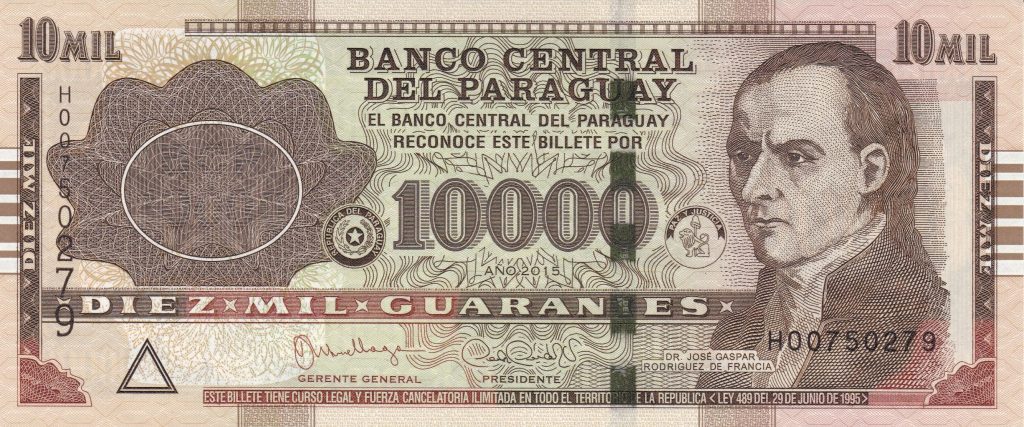
Honours José Gaspar Rodríguez de Francia, 'El Supremo', first dictator who protected Paraguay's independence.